What’s included in this test

Red blood cells 7 markers
Red Cell Distribution Width (RDW)
RDW measures the variation in size of your red blood cells. It helps identify types of anaemia and can indicate nutrient deficiencies such as iron, B12, or folate.
Clotting status 2 markers
Mean Platelet Volume (MPV)
MPV reflects the average size of your platelets. It provides insight into platelet production and activity, and can help assess risk of clotting or bleeding disorders.
White blood cells 6 markers
Monocytes (Mo)
Monocytes assist in clearing infections and dead cells. Elevated levels may indicate chronic inflammation or certain infections.
Lymphocytes (Ly)
Lymphocytes help fight viral infections and are vital to your immune memory. Abnormal levels can be seen in viral illnesses or immune disorders.
Neutrophils (Ne)
Neutrophils are your body’s first line of defense against infection. High levels usually indicate bacterial infections or inflammation.
Basophils (Ba)
Basophils are white blood cells that release histamine during allergic responses. They are rarely elevated but may increase in certain chronic inflammatory conditions.
Eosinophils (Eo)
Eosinophils are a type of white blood cell involved in allergic reactions and fighting parasites. Elevated levels may suggest allergy, asthma, or parasitic infection.
Clotting status 2 markers
Platelets (PLT)
Platelets are responsible for blood clotting. Low levels may lead to bleeding, while high levels can increase the risk of thrombosis.
Red blood cells 7 markers
Mean Corpuscular Haemoglobin Concentration (MCHC)
MCHC shows the concentration of haemoglobin in your red blood cells. It's useful in evaluating anaemia types and red cell colour (hypochromia).
Mean Corpuscular Haemoglobin (MCH)
MCH indicates the average amount of haemoglobin in each red blood cell. Abnormal levels help identify different forms of anaemia.
Mean Corpuscular Volume (MCV)
MCV reflects the average size of your red blood cells. It helps classify types of anaemia — whether cells are too large, too small, or just right in size.
Haematocrit (HCT)
HCT shows the percentage of blood made up of red blood cells. It helps assess anaemia, dehydration, and overall blood volume status.
White blood cells 6 markers
White Blood Cells (WBC)
WBC count indicates immune system activity. Elevated levels can suggest infection or inflammation, while low levels may reflect bone marrow suppression or immune deficiency.
Red blood cells 7 markers
Red Blood Cells (RBC)
RBC count measures the number of red blood cells in your blood. It's key to assessing oxygen-carrying capacity and diagnosing anaemia or bone marrow issues.
Haemoglobin (Hb)
Haemoglobin carries oxygen from your lungs to the rest of your body. Low levels may indicate anaemia, while high levels could signal dehydration or other blood disorders.
Thyroid health 3 markers
Free T4
Free T4 gives insight into the level of unbound thyroxine hormone. It’s key for diagnosing thyroid conditions when TSH alone is inconclusive.
Free T3
Free T3 is the active form of triiodothyronine, a thyroid hormone. It’s useful in identifying hyperthyroidism or ineffective thyroid conversion.
TSH
TSH controls the thyroid gland’s hormone production. It’s the most common marker for identifying thyroid dysfunction, such as hypothyroidism.
Hormone health 1 marker
Prolactin
Prolactin is a hormone primarily involved in lactation but also impacts fertility and menstrual cycles. High levels can suggest pituitary issues.
Vitamins 2 markers
Vitamin B12
Vitamin B12 is vital for energy production and nerve health. Deficiency can lead to fatigue, memory problems, and anaemia.
Iron markers 1 marker
Ferritin
Ferritin reflects the body's stored iron. It's a more reliable marker for iron deficiency than serum iron, especially in chronic conditions.
Vitamins 2 markers
Folate
Folate is a B-vitamin essential for DNA synthesis and red blood cell production. It's especially important during pregnancy and for individuals with fatigue or dietary deficiencies.
Liver health 8 markers
Alanine Aminotransferase (ALT)
Alanine Aminotransferase (ALT) is an enzyme mainly found in the liver. Elevated levels can indicate liver damage from conditions like hepatitis or fatty liver disease.
Bilirubin (Total)
Total bilirubin helps assess liver function and red blood cell breakdown. High levels can cause jaundice and indicate liver or gallbladder issues.
Albumin
Albumin is a major protein in the blood, essential for maintaining fluid balance and transporting nutrients. Low levels can signal liver or kidney disease.
Total protein
Total protein includes albumin and globulin. It's used to assess liver function, kidney health, and nutritional status.
Alkaline phosphatase (ALP)
ALP is an enzyme related to the liver, bones, and bile ducts. It's often tested to investigate liver function or bone disorders.
Aspartate Aminotransferase (AST) (SGOT)
AST is an enzyme found in the liver and muscles. Elevated levels can indicate liver damage, muscle injury, or other underlying conditions.
Gamma-Glutamyl transpeptidase (GGT)
GGT is an enzyme found in the liver and bile ducts. It's commonly tested to evaluate liver function and detect bile duct obstructions or alcohol-related liver damage.
Globulin
Globulin is a group of proteins involved in liver function, immune response, and blood clotting. Abnormal levels can point to infections, liver disease, or immune system disorders.
Kidney health 3 markers
eGFR (estimated Glomerular Filtration Rate)
eGFR estimates how well your kidneys are filtering waste from your blood. It's a key indicator of kidney function and is especially useful for early detection of chronic kidney disease (CKD).
Electrolytes 4 markers
Bicarbonate
Bicarbonate helps regulate your body’s pH balance. It's tested when evaluating acid-base disorders or respiratory conditions.
Potassium
Potassium is an essential electrolyte for heart rhythm, muscle contractions, and nerve signals. Imbalances can lead to serious health issues.
Sodium
Sodium is critical for fluid balance, nerve function, and blood pressure regulation. Abnormal levels can point to kidney, adrenal, or hydration issues.
Kidney health 3 markers
Urea
Urea is a byproduct of protein metabolism, filtered by the kidneys. High levels may indicate impaired kidney function or dehydration.
Electrolytes 4 markers
Chloride
Chloride helps regulate fluid balance, blood pressure, and pH levels. It's usually measured with other electrolytes to assess hydration and kidney function.
Kidney health 3 markers
Creatinine
Creatinine is a waste product filtered by your kidneys. Measuring creatinine helps assess kidney function and detect early signs of kidney disease.
Blood sugar 2 markers
Glucose
Glucose testing measures blood sugar levels at a specific point in time. It's essential for screening diabetes and assessing metabolic health during routine check-ups.
Haemoglobin A1c (HBA1c)
HbA1c reflects your average blood glucose over the past 2–3 months. It’s the gold-standard test for diagnosing and managing diabetes.
Inflammation 1 marker
C Reactive Protein (CRP)
CRP is a marker of inflammation in the body. Elevated CRP may indicate infection, autoimmune disorders, or increased cardiovascular risk.

About this test

What is this test for?

The test is used to identify common physiological causes of fatigue and guide appropriate treatment or further investigation.


What does this test measure?

The panel evaluates markers such as iron levels, thyroid function, vitamin status, and other indicators that may contribute to fatigue.


When is this test recommended?

This test may be requested when persistent fatigue is present without a clear explanation. It may be part of an initial investigation into low energy levels.


Trusted by Thousands

FAQs

About this test 7 questions
What autoimmune diseases affect the thyroid?
The two main autoimmune conditions that affect the thyroid are Hashimoto's thyroiditis, which leads to an underactive thyroid (hypothyroidism), and Graves' disease, which causes an overactive thyroid (hyperthyroidism). While there is currently no cure for either condition, both can be effectively managed with the right treatment plan — making proper testing essential. To reach a diagnosis, your doctor will consider your symptoms along with the results of thyroid blood tests to determine whether a thyroid disorder is present.
What is thyroid disease and who is at risk?
It is estimated that around 1 in 20 people may have a thyroid disorder. Several conditions can impact the normal function of the thyroid, including an underactive thyroid (hypothyroidism), an overactive thyroid (hyperthyroidism), autoimmune thyroid disease, thyroid swelling (goitre), nodules, or thyroid cancer. While anyone can develop a thyroid disorder, certain factors increase the risk. These include being female, being over the age of 50, or having a family history of thyroid problems.
Why check for vitamins and minerals in thyroid profile?
Key vitamins and minerals that support thyroid function and may mimic the symptoms of an underactive thyroid when they are low. These tests include: vitamin D,vitamin B12, folate (vitamin B9) and ferritin – a marker of iron storage. To provide further insight, we also measure C-reactive protein (CRP), an inflammation marker. This helps interpret your ferritin levels more accurately and offers an indication of whether an autoimmune condition may be contributing to inflammation in your body.
What does a blood test for thyroid function show?
Many standard thyroid tests only measure TSH and FT4, which may not reveal issues with converting FT4 into the more biologically active FT3. It is possible to have normal TSH and FT4 levels but still experience symptoms of an underactive thyroid if FT3 levels are low. Measuring FT3 is especially useful if you are taking T3-containing medication, such as liothyronine or natural desiccated thyroid (NDT). TSH plays a key role by stimulating the thyroid gland to produce thyroid hormones, primarily T4. Elevated TSH levels can indicate that your thyroid is not producing enough T4 to meet your body's needs. However, testing TSH alone does not provide a complete picture of thyroid function, which is why we also measure FT4 and FT3 for a more accurate assessment.
Why should I test my thyroid?
If you're experiencing symptoms like unexplained changes in weight, energy levels, mood, skin, or hair, your thyroid could be a contributing factor. The thyroid plays a crucial role in regulating your metabolism, body temperature, and energy production, so even slight imbalances can affect how you feel day to day. A thyroid blood test can help determine whether your thyroid is functioning properly by measuring key hormones such as TSH, FT4, and FT3. Identifying an underactive (hypothyroidism) or overactive (hyperthyroidism) thyroid early can make a significant difference in managing your symptoms and improving your overall well-being.
What is the thyroid?
The thyroid is a small, butterfly-shaped gland located at the front of the neck. It produces hormones that are essential for regulating your metabolism, energy levels, mood, and more. Thyroid issues are especially common in women and can affect menstrual cycles, fertility, weight, and emotional wellbeing. When the thyroid produces too much hormone, it causes an overactive thyroid (hyperthyroidism). When it produces too little, it leads to an underactive thyroid (hypothyroidism). Both conditions can significantly impact overall health, particularly during key life stages such as pregnancy, postpartum, and menopause.
Why is thyroid function tested as part of a female hormone panel?
Many symptoms associated with hormonal changes due to ageing, such as fatigue, weight and mood changes can closely resemble those of an underactive thyroid. Thyroid disorders are more common in women and are often caused by autoimmune conditions, where the body's immune system mistakenly attacks the thyroid gland. Our test helps determine whether your thyroid is functioning normally and whether an autoimmune condition may be contributing to your symptoms. Even when thyroid hormone levels are within the normal range, elevated thyroid antibodies have been linked to a higher risk of miscarriage. If left untreated, thyroid disorders can also increase health risks for both the mother and the baby during pregnancy.
Visiting our clinic 4 questions
How long will my appointment take?
If you have pre booked your appointment, it should be around 15 minutes. Sometimes it can take slightly longer, we always aim to have you out as soon as possible.
I need to cancel/reschedule my appointment. How can I do this?
Contact reception by phone or WhatsApp on 020 4525 8805, or email info@clinilabs.co.uk, and we will move your appointment to another date. The collection fee paid online is non-refundable but can be re-arranged to any other date.
What is a venous draw/phlebotomy?
Phlebotomy is the act of taking blood from a vein (A venous draw). Certified phlebotomists are required to undertake this safely and expertly. There is a fee for the taking of the sample. This is a standard charge to either draw blood or handle urine or stool samples. This fee must only be paid once per visit. If this is prepaid (when booking online) it is nonrefundable but can be re-arranged to any other date. The price is £50 if paid in person or £30 if prepaid when booking online
When can I expect my results to be out for same day results?
For tests marked same-day results, have your sample taken at our Fitzrovia clinic by 4pm on a working day and your report is sent by secure email the same day, usually within hours. The earlier your appointment, the sooner your results. Tests with a longer turnaround show it on their page.
Common questions 16 questions
Where are you located?
Our flagship clinic and laboratory are at 41–42 Foley Street, Fitzrovia, London W1W 7TS, a few minutes' walk from Oxford Circus (Central, Victoria and Bakerloo lines), Warren Street (Victoria and Northern), Goodge Street (Northern), Tottenham Court Road (Central and Elizabeth) and Great Portland Street (Circle, Metropolitan and Hammersmith & City).
How will I receive my results?
All results will be sent out by email. Please ensure you have provided us with the best email to reach you on.
How do I prepare for my test?
In most cases, there is no preparation needed. With particular tests, we recommend fasting for 8-10 hours ahead. These tests include glucose, cholesterol/lipid profile and homocysteine. In the event that it is difficult for you to fast, this will be noted by the phlebotomist, and where applicable adjusted reference ranges applied. If you are unsure whether you need to fast, please confirm.
How can I contact Clinilabs?
For all patient enquiries you can contact the reception by phone/whatsapp on 020 4525 8805 or via email: info@clinilabs.co.uk. For careers at Clinilabs please email careers@clinilabs.co.uk
Do you work with the NHS?
We are a private laboratory, and do not currently offer NHS services.
Can I speak with a doctor about my results?
We can provide written clinical interpretations and/or virtual/in person consultations for your results. These are additional services and are not included in the price of your tests. Please enquire if you are interested in these services. The price of the tests includes a report that you will receive by email which includes your results as well as (where applicable) reference ranges and indications whether you fall outside of these.
How long will my results take?
At Clinilabs we do our best to give your results to you as soon as possible. Each test has an estimated turnaround time which can be found on each test’s page on our website. Please note that these are estimates and whilst we typically provide results sooner than advertised, we may in some cases require more time. If you are unsure about the turnaround time of your specific test and or require tests urgently, please confirm ahead of your visit.
Do you accept insurance?
We do partner with medical insurance providers such as Bupa UK, Bupa Global, Allianz, Cigna, WPA, Vitality. Please note that pre-authorisation is required for payment by insurance. We will also require payment card details to be kept on file; which will only be used in the event your insurance company does not cover your treatment. Please note that prices can vary greatly between insurance companies, and promotional online-only prices may not reflect prices charged if direct billing is being undertaken.
What is a panel/profile?
A panel (or profile) is a group of single tests chosen together to answer one question, such as iron status, thyroid function or a general health check. Booking the panel is cheaper than booking each marker separately, and the markers are reported together so they can be read in context. Each panel's page lists exactly what it includes.
I'm not sure which test I need?
If you are unsure which test you need, we recommend taking a look at some of our packages. Our website is divided by section and our clinical team have designed a number of panels to suit the most common requests. If still unsure, pleas feel free to contact us by whatsapp/phone/email for guidance. Ultimately, while our team may advise on our offerings, we recommend checking with your doctor as the ultimate responsibility is on the customer to select their tests.
Do I need to fast before my test?
Some blood tests require fasting, but many do not. For example, glucose, cholesterol/lipid profile and homocysteine are among some of the tests needed to fast between 8 - 12 hours. If fasting is required, we recommend doing so overnight and scheduling your appointment for the morning. This helps minimise discomfort from going without food. During the fasting period, you should stay well-hydrated, water is ideal, and you may also have clear, calorie-free fluids such as black tea or black coffee (without milk or sugar). If you are on medication, please check with your referring doctor if you need to fast. If you are self-referring, then you can call us to find out our recommendation. Please note: If you are unable to fast, this will be noted and adjusted reference ranges applied.
Why are my Clinilabs blood test results different from my other blood test results?
It’s completely normal to see slight differences in blood test results between different laboratories. These variations can occur for several reasons: Analytical variation: Even when the same sample is tested multiple times on the same machine, small differences can occur. This is called analytical variation and is measured using the coefficient of variation (CV). For example, total cholesterol has a typical CV of around 3% at a level of 5.0 mmol/L, meaning results between 4.85 and 5.15 mmol/L are entirely expected and not clinically significant. Test-specific variability: Some tests, especially hormone tests, naturally show more variation. These tests can have CVs ranging from 3% to 10%, so minor result changes are common and generally not a cause for concern. Laboratory differences: Each lab may use different analysers, reference ranges, or testing methods. Even factors like sample type, collection time, and processing date can lead to slight result differences. Biological variation: Your body’s own levels can fluctuate throughout the day due to stress, sleep, meals, or hormonal cycles. These natural changes can influence your test results as well.
Can I collect my blood sample at home?

A home finger-prick kit may be self-collected where the selected blood test is suitable for capillary sampling. Follow the kit instructions carefully, because not every test can use a finger-prick sample.

A venous blood draw must not be self-collected: it must be performed by a qualified healthcare professional who is trained and competent in phlebotomy. You can arrange this at a Clinilabs partner clinic or, where offered, as a home visit.

Can my child come to Clinilabs?
At this point in time you must be over 16 to attend Clinilabs. We may however be able to arrange pediatric home visits for children. This is subject to availability. Please enquire with reception if you are interested in this.
Do I need a doctor's referral?
For the majority of tests you do not need to have a referral, but you do need to know which test or set of tests you will need to have. Whilst we can (when possible) help to explain tests available, it is the patient’s responsibility to select the correct test/s, if requested by their doctor. For some specialist tests, you may require a doctors referral. This will be communicated to you upon enquiry.
How do I book an appointment at a partner clinic?
Order your test online and choose the partner clinic option at checkout. We then post you a collection kit, and inside it is a unique booking code. Once the kit has arrived, go to clinics.clinilabs.co.uk, enter the code and choose a clinic and time that suit you. You cannot book before the kit arrives, because the code is needed to make the booking. Take the kit with you to the appointment. After your sample is taken, you post it back to our laboratory yourself using the pre-paid label in the kit.

Most private blood test providers in London send your blood elsewhere. We are the laboratory.

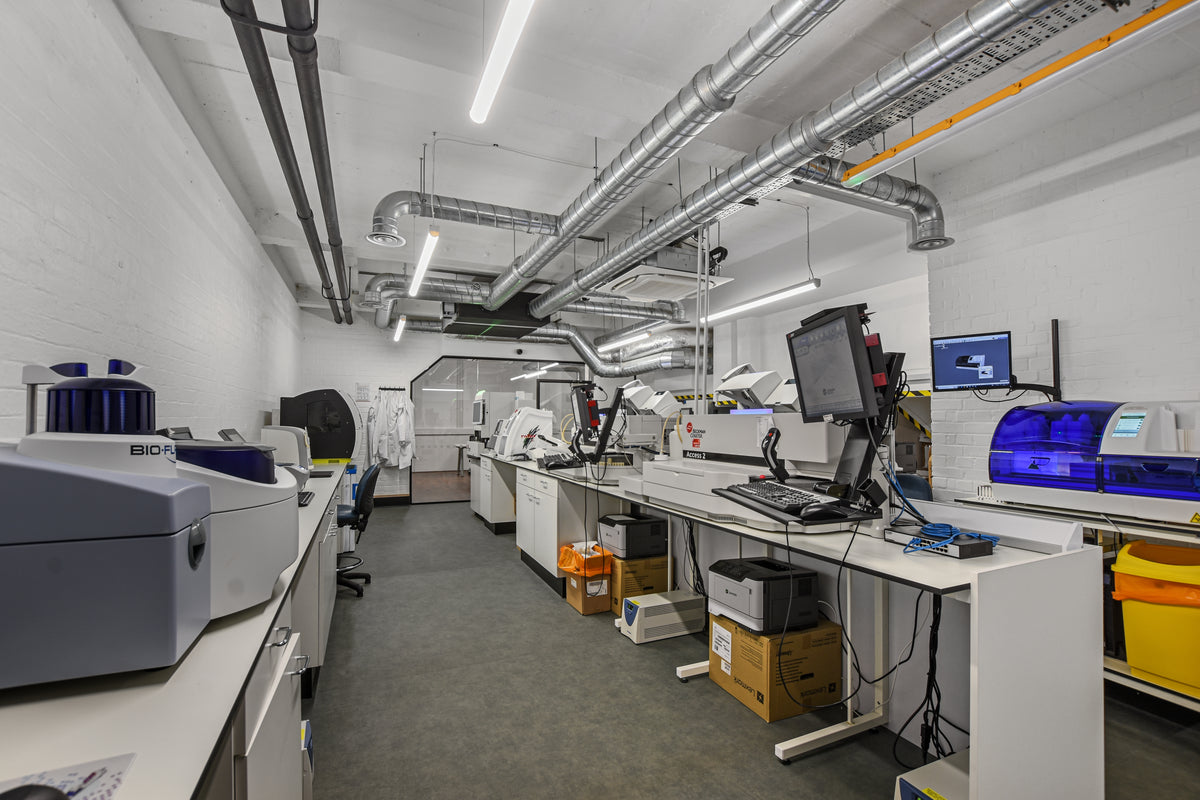
Inside the Clinilabs laboratory at 41-42 Foley Street, Fitzrovia

Wherever your sample is taken, it is analysed by us, in our own building, on the day it arrives. That is why results come back within hours rather than days.

  1. Your sample is taken, whichever way suits you
    • Our flagship Fitzrovia clinic — same-day results for samples taken by 4pm
    • A partner clinic near you — over 200 across the UK, sample posted back to our lab with a pre-paid Tracked 24 label
    • A finger-prick kit at home — post it back, analysed the day it arrives
    Each test page shows which options it supports before you buy.
  2. Analysed in our own UKAS-accredited laboratory at 41-42 Foley Street, the day it reaches us
  3. Validated and released to you, often the same day

Same-day results apply to samples received at the laboratory before 4pm on a working day. Some specialist tests take longer; each test page shows its turnaround.

Our clinic at 41–42 Foley Street serves Fitzrovia, Marylebone, Soho, Bloomsbury, Mayfair and the City, a few minutes from Oxford Circus and Goodge Street.